Top 10 Plastic Lens Types for Your Business Needs?
In the dynamic world of eyewear, the relevance of plastic lenses cannot be overstated. Dr. Emily Carter, a leading expert in optical materials, once said, “Plastic lenses offer versatility and durability that traditional materials struggle to match.” With advancements in technology, plastic lenses have evolved dramatically. They provide excellent clarity while being lightweight and impact-resistant, catering to various business needs.
Choosing the right type of plastic lens is crucial for businesses. Each type serves different functions, from everyday wear to specialized applications. Understanding these options empowers businesses to meet specific customer demands. For instance, polarized lenses reduce glare for outdoor activities, while photochromic lenses adapt to changing light conditions.
However, selecting the best plastic lens isn't a straightforward task. Many businesses face challenges like endless product options and varying quality levels. It’s essential to prioritize quality over cost to ensure customer satisfaction. Reflecting on these aspects helps businesses navigate the complexities of the plastic lens market effectively.
Overview of Plastic Lens Types and Their Applications
When considering plastic lens types for business, clarity and purpose are vital. Polycarbonate lenses are highly durable and provide impact resistance. They are ideal for industries involving safety glasses, especially in manufacturing and construction. Reports show that approximately 90% of safety lenses are made from polycarbonate.
Another popular choice is CR-39, which offers excellent optical clarity. CR-39 lenses are lighter than glass and provide UV protection. They work well for prescription eyewear and are often used in everyday sunglasses. According to industry data, CR-39 lenses account for around 60% of the prescription lens market.
A lesser-known option is Trivex, known for its superior lightweight design. Trivex lenses mix quality optics with high resistance to impact. These lenses are becoming a preferred choice for sports eyewear. However, the cost can be a barrier and might not suit all budgets. Each lens type has unique advantages and specific applications, reminding businesses to assess their needs carefully.
Top 10 Plastic Lens Types for Your Business Needs
Key Factors to Consider When Choosing Plastic Lenses
When selecting plastic lenses for your business, several key factors come into play. First, consider the lens material. Different plastics offer varying levels of durability and optical clarity. Polycarbonate lenses are lightweight and impact-resistant but may scratch more easily. High-index plastic lenses provide thinner profiles, ideal for strong prescriptions.
Next, think about the lens coatings. Anti-reflective coatings can enhance vision quality, especially for digital screens. Additionally, consider UV protection. This prevents harmful rays from damaging eyes over time. Each coating has its pros and cons, warranting careful evaluation based on your specific needs.
Another crucial aspect is the lens design. Aspheric lenses flatten the profile, reducing distortion. Conversely, traditional curved lenses can sometimes provide a wider field of view. Understanding these differences is vital for making an informed decision. As you weigh these factors, reflect on how each option aligns with your business goals and customer requirements.
Top 10 Plastic Lens Types for Your Business Needs
| Lens Type |
Key Features |
Ideal For |
Price Range |
| Standard Plastic |
Lightweight, low cost |
Everyday use |
$10 - $20 |
| High-Index Plastic |
Thinner, lighter for strong prescriptions |
Strong prescriptions |
$30 - $80 |
| Polycarbonate |
Impact-resistant, UV protection |
Children, sports |
$40 - $90 |
| Trivex |
Lightweight, superior optics |
Active lifestyles |
$50 - $100 |
| Photochromic |
Transitions in sunlight |
Outdoor use |
$60 - $150 |
| Blue Light Blocking |
Reduces eye strain |
Screen time |
$40 - $120 |
| Anti-Reflective Coated |
Reduces glare, improves vision |
Night driving, computer work |
$50 - $130 |
| Mirror Coated |
Stylish, reflective finish |
Fashion eyewear |
$50 - $140 |
| Sunglasses |
UV protection, tinted lenses |
Sunny days |
$20 - $200 |
| Photochromic Sports |
Active use, rapid transition |
Athletes |
$80 - $180 |
Top 10 Popular Plastic Lens Types for Various Industries
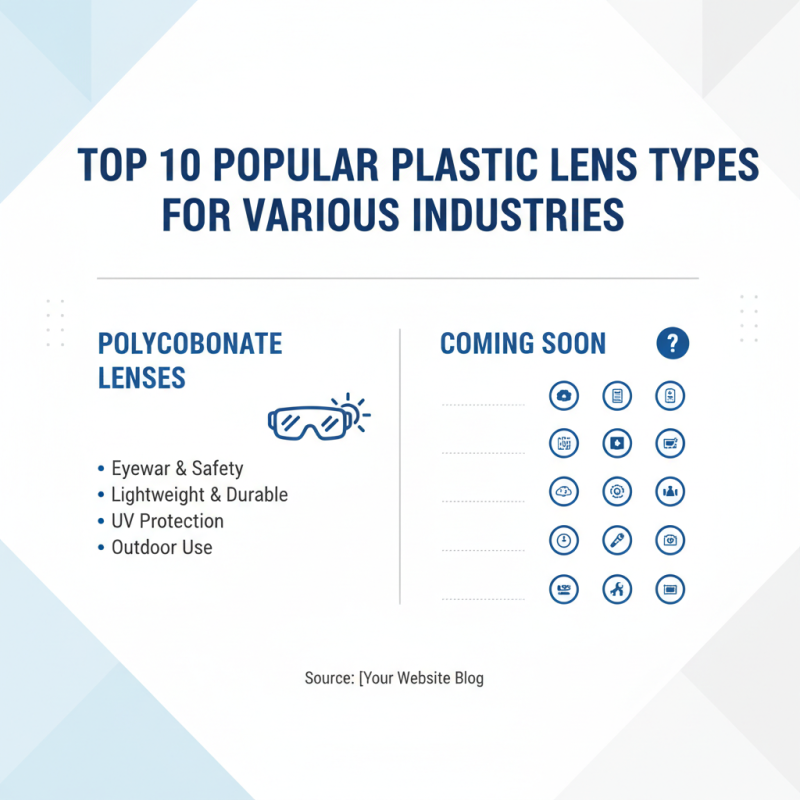
In various industries, choosing the right type of plastic lens is crucial. Each lens type serves different functions and meets specific needs. Polycarbonate lenses are popular in the eyewear and safety industries. They are lightweight yet extremely durable. These lenses often offer UV protection, making them ideal for outdoor use.
Acrylic lenses are another common choice. They provide excellent clarity and are widely used in photography and advertising. These lenses can be easily molded into various shapes, allowing for creative applications. However, they can scratch more easily than other options. This is something users should consider when selecting lenses.
Another option is CR-39 lenses. They are often used in optical applications for their affordability and good optical quality. Industries value these lenses for everyday eyewear. However, they may not offer the same level of impact resistance as polycarbonate lenses. Businesses need to weigh the pros and cons of each type. Understanding your specific requirements will guide the best choice.
Comparative Analysis of Plastic Lens Performance and Durability
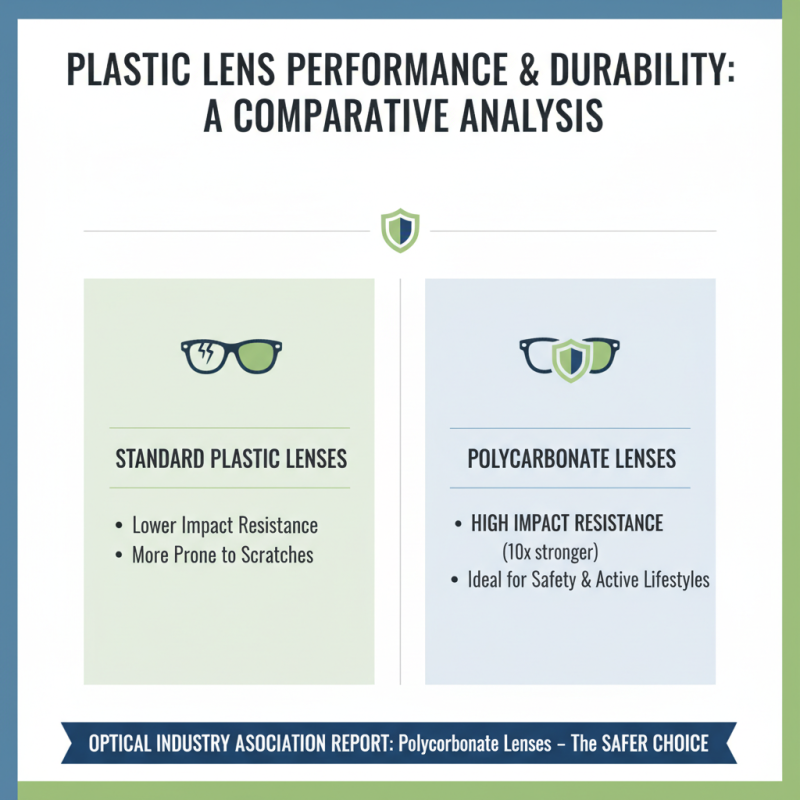
When selecting plastic lenses, performance and durability are essential considerations. A recent report from the Optical Industry Association indicates that polycarbonate lenses have become increasingly popular due to their high impact resistance. These lenses can withstand up to 10 times more impact than standard plastic lenses. This makes them ideal for environments where safety is a priority.
A comparative analysis further reveals that Trivex lenses provide similar durability, coupled with superior optical clarity. According to a 2022 study published in the Journal of Optometry, Trivex lenses scored higher in scratch resistance compared to their polycarbonate counterparts. However, they tend to be priced higher, which might not suit every business's budget.
While acrylic lenses are lighter and more flexible, they are less scratch-resistant. This is a trade-off that businesses need to consider. Opting for a lens that prioritizes lightweight properties may lead to more frequent replacements. Understanding these nuances in lens performance is crucial, as poor choices can affect customer satisfaction and operational costs. Each lens type has its strengths and weaknesses, necessitating a deeper evaluation of specific business needs.
Future Trends in Plastic Lens Technology and Innovations
The future of plastic lens technology is vibrant and evolving. Innovations in materials are leading the way. New types of polymers are lightweight and more resistant to scratches. This means longer-lasting lenses that don’t easily compromise on quality. The merge of technology and design creates exciting opportunities for industries.
Eco-friendly practices are gaining attention. Biodegradable plastics are emerging as a sustainable alternative to traditional materials. While this is a step forward, production methods still need refinement. The longevity of these materials poses questions about their practical use in various settings. As the market demands greener options, businesses face pressure to adapt.
Smart lenses are another fascinating area. Integrating augmented reality features presents both possibilities and challenges. Users find themselves in a realm of convenience, but there are concerns about privacy and security. Balancing innovation with ethical considerations is crucial. The path ahead is filled with potential. However, companies must navigate the complexities that come with these advancements.