2026 Top Trends in Progressive Lenses What to Expect for Your Vision Care?
As we approach 2026, the world of vision care is evolving rapidly. Progressive lenses are at the forefront of this transformation. They offer a seamless transition between different focal points, addressing the needs of aging eyes and enhancing daily visual experiences. With advancements in lens technology, more options are becoming available. Every consumer deserves clarity in their vision.
Imagine waking up each morning and seeing the world with crisp, clear vision. Progressive lenses can make this a reality. They adapt to various activities, from reading to driving, without the need for multiple pairs of glasses. Practitioners are observing how these lenses are designed with precision. However, selecting the right progressive lens is not always straightforward.
While many appreciate the benefits, some users report a learning curve. Adapting to new progressive lenses can be challenging. Understanding user experiences and expert feedback is vital. The landscape of progressive lenses is rich with innovations. Exploring these trends will help consumers navigate their vision care choices in 2026 and beyond.

Emerging Technologies in Progressive Lens Design for 2026
Emerging technologies are shaping the future of progressive lenses. In 2026, we can expect significant improvements in design and functionality. One major trend is customizable lenses. These lenses adapt to individual vision needs. Advanced software allows precise adjustments, enhancing comfort for users.
Another hot topic is smart lenses. These innovative designs integrate technology directly into the lens. Users can experience features like prescription adjustments and blue light filtering without extra devices. This shift may reflect a growing desire for more personalized eye care solutions.
Tips: Regular eye exams remain crucial. Stay informed about the latest advancements in lens technology. Consult with your eye care professional about tailored options. Also, consider your lifestyle when choosing lenses. Progressive lenses can vary significantly based on daily activities.
2026 Top Trends in Progressive Lenses What to Expect for Your Vision Care?
| Trend |
Description |
Expected Impact |
| Smart Lenses |
Integration of augmented reality features for enhanced visual experiences. |
Improved user interaction with the environment and real-time information display. |
| Personalized Designs |
Lenses tailored to individual visual needs using advanced eye-mapping technologies. |
Enhanced comfort and clarity in vision for varying distances. |
| Light Adaptive Lenses |
Progressive lenses that adjust tint based on lighting conditions. |
Reduction of glare and improved visual comfort in varying light environments. |
| Sustainable Materials |
Use of eco-friendly materials in lens production. |
Minimized environmental impact and appeal to eco-conscious consumers. |
| Progressive Lens Coatings |
Advanced coatings that reduce reflections and increase scratch resistance. |
Better durability and visual clarity over time. |
Innovative Materials and Coatings Enhancing Progressive Lenses
The landscape of progressive lenses is undergoing remarkable transformations, largely owing to innovative materials and coatings. Advanced polymers are now being utilized to create lenses that are lighter and more durable. These materials enhance comfort and reduce fatigue for the wearer, especially during long hours of use. The choice of anti-reflective coatings plays a critical role, too. They minimize glare and improve visual clarity, catering to the needs of different environments, whether working on a computer or driving at night.
Additionally, photochromic technology is gaining ground in progressive lenses. This feature allows lenses to adapt to varying light conditions, offering protection from harmful UV rays. However, the effectiveness of these coatings can vary based on the lens design. It’s essential to consider these factors when choosing lenses.
Progress in this field may also come with complexities, as wearers might take time to adapt to new materials or special features. Regular consultations with vision care professionals can aid in making informed choices that best suit individual lifestyles and needs.
Trends in Visual Comfort and Ergonomics for Progressive Lens Users
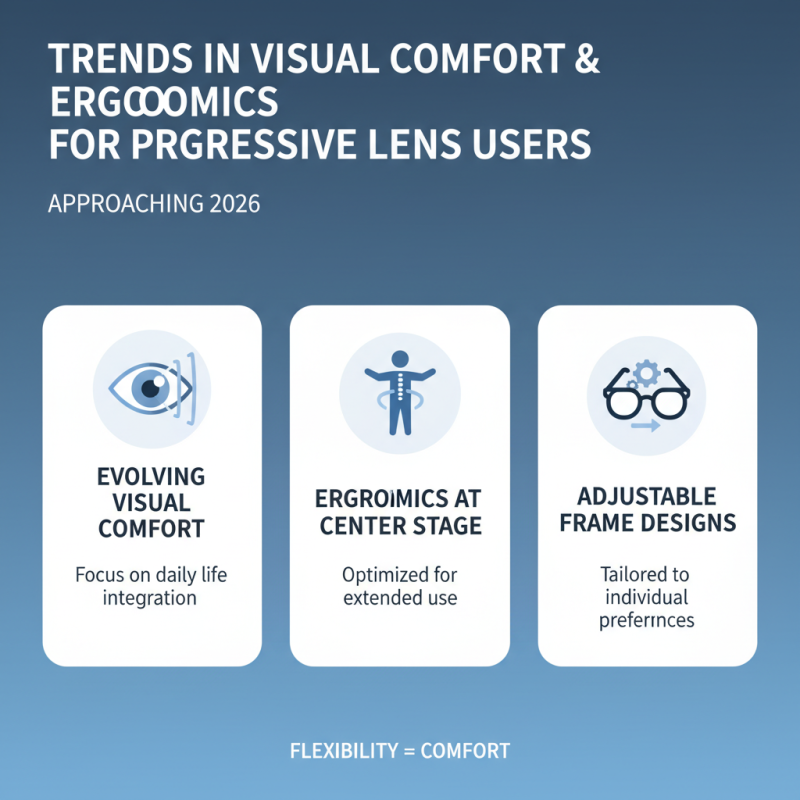
As we approach 2026, visual comfort for progressive lens users is evolving. Ergonomics is taking center stage, focusing on how lenses fit into your daily life. Adjustable frame designs are becoming popular, as they cater to individual preferences. This movement emphasizes flexibility, ensuring comfort during extended use.
Innovative lens technology is also crucial. Lenses are being designed to minimize distortion. Users can expect wider fields of view and clearer vision at all distances. However, achieving the perfect balance between style and functionality can be challenging. Consumers often report discomfort, leading to the need for further adjustments. The goal is a seamless blend of comfort and effectiveness.
Attention to visual ergonomics means addressing lighting conditions as well. Anti-reflective coatings and blue light filters are gaining traction. These features reduce eye strain in various environments. But not all users may find these solutions effective. Personalized adjustments remain essential. A commitment to understanding individual needs will drive the future of progressive lenses.
Personalization and Customization of Progressive Lenses in 2026
The future of progressive lenses in 2026 will see a significant shift towards personalization and customization. As technology advances, individuals will demand lenses tailored to their unique visual needs. According to market research, nearly 70% of consumers express a desire for customized vision solutions. This trend will make personalized lenses more accessible and commonplace in vision care.
Customization will extend beyond prescriptions. Specialized coatings and tint options will cater to different lifestyles. For instance, digital lens options will address the increasing screen time many people face daily. A recent report found that 80% of individuals using digital devices experience digital eye strain. Custom solutions can alleviate these issues by providing clearer vision and reduced glare.
**Tip:** When exploring progressive lenses, consider your daily activities. Identify your primary visual demands to guide your selection process.
The focus on personalization presents opportunities and challenges. Not every practitioner may be equipped for advanced customization technology. Additionally, the cost of personalized lenses may be higher, which can limit access for some consumers. It’s essential for optometrists to educate patients about the benefits and available options within this evolving landscape.
**Tip:** Schedule a comprehensive eye exam to discuss personalized solutions with a qualified professional.
2026 Top Trends in Progressive Lenses
As we look towards 2026, the personalization and customization of progressive lenses are becoming more prominent in vision care. The following chart illustrates the expected adoption rates of key features in progressive lenses, based on consumer preference surveys.
The Role of Artificial Intelligence in Vision Care and Lens Selection
Artificial intelligence is rapidly transforming vision care. It offers innovative solutions for lens selection, enhancing personalization for every patient. AI algorithms analyze individual needs, preferences, and lifestyles to recommend the best progressive lenses. This tailored approach helps ensure optimal vision across various distances.
However, the integration of AI in lens selection is not without challenges. The accuracy of data input can affect recommendations. Misinterpretations or outdated information could lead to unsatisfactory choices. Continuous feedback from users is crucial. As technology evolves, aligning AI with human expertise is essential for effective outcomes.
Moreover, there's a growing debate about the reliance on technology in healthcare. While AI can streamline processes, human intuition and experience still play vital roles in vision care. Striking the right balance between technology and personal care is what truly matters for patient satisfaction. The future of lens selection will require collaboration between AI innovations and trusted eye care professionals.