2026 How to Choose the Right Uncoated Lens for Your Needs?
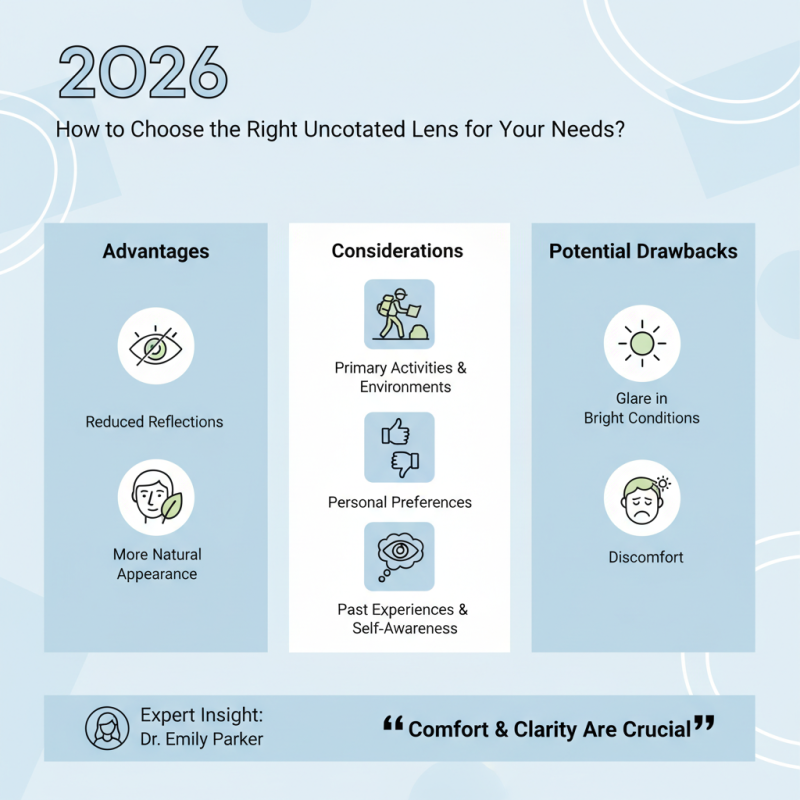
Choosing the right Uncoated Lens can greatly influence your visual experience. According to industry expert Dr. Emily Parker, “Selecting the right lens is crucial for both comfort and clarity.” This sentiment rings true for many who rely on lenses for everyday tasks.
Uncoated Lenses offer certain advantages, such as reduced reflections and a more natural appearance. However, they may not be suitable for everyone. Users may experience glare or discomfort in bright conditions. Understanding your specific needs is essential in making this choice.
Finding the right Uncoated Lens involves assessing various factors. Consider your primary activities, environments, and personal preferences. Reflect on your past experiences with lenses. This self-awareness can help you navigate through the options available. Ultimately, the right lens should enhance your vision without compromising comfort.
Understanding Uncoated Lenses: Key Features and Benefits
When selecting uncoated lenses, understanding their key features is crucial. Uncoated lenses typically offer a more natural viewing experience. They allow for true color perception without distortions often caused by coatings. This can be advantageous for activities where color accuracy matters, such as art or photography.
One notable benefit of uncoated lenses is their lower cost. They may be a budget-friendly option for those who prioritize functionality over added features. However, uncoated lenses can also be more prone to scratches. Frequent use without careful handling may lead to the need for replacements sooner than expected.
Additionally, uncoated lenses may reflect more light. This can result in glare, particularly in bright conditions. Users must weigh the trade-offs between glare and true color perception. It’s worth considering how often you’ll face sunlight or artificial lighting while using these lenses. Reflecting on any personal experiences will help guide the decision-making process.
Identifying Your Vision Needs: Types of Vision Corrections
When choosing the right uncoated lenses, understanding your vision needs is crucial. Various types of vision corrections exist, each suited to specific conditions. Research shows that nearly 75% of adults need vision correction, which highlights the importance of selecting the right lenses.
For those with myopia, or nearsightedness, uncoated lenses can provide clear images at a close range. In contrast, hyperopia, or farsightedness, often requires different lens characteristics for optimal clarity. Astigmatism can complicate matters further, necessitating special designs in your lenses. A report by the American Optometric Association indicates that 30% of adults have astigmatism, showcasing the need for tailored solutions.
**Tips:** Consider your daily activities. If you spend hours on screens, prioritize lens types that reduce glare. Moreover, consult with an eye care professional to discuss your specific vision issues. This approach ensures you receive lenses suited to your unique lifestyle.
What works for one person may not work for another. Frame sizes, shapes, and diverse conditions all play a role in your lens choices. It’s essential to reflect on these factors and how they impact your vision. Regular check-ups are vital. Foresight into changing needs can guide your decision-making. Adapting to your evolving vision requirements may lead to improved clarity and comfort in daily life.
2026 Vision Needs and Uncoated Lens Selection
Evaluating Lens Material Options for Uncoated Lenses
When choosing uncoated lenses, material options play a crucial role. Uncoated lenses can be made from various materials like glass and plastic. Glass offers excellent optical clarity. It’s scratch-resistant but heavier. On the other hand, plastic lenses are lightweight and shatter-resistant. They can be more comfortable for long periods of wear.
Consider your daily activities when selecting the right lens material. If you lead an active lifestyle, plastic may suit you better. However, if you prioritize visual acuity, glass could be the better choice. Reflect on how often you need to replace lenses. Glass tends to last longer but may require more care.
Think about your budget, too. Some materials are more affordable, while others may cost more upfront. Weigh the benefits and drawbacks of each option. What matters most? Comfort, clarity, or durability? These reflections will guide your decision-making process, helping you choose wisely based on your needs.
2026 How to Choose the Right Uncoated Lens for Your Needs? - Evaluating Lens Material Options for Uncoated Lenses
| Lens Material |
Weight (grams) |
Impact Resistance |
Optical Clarity |
Cost (USD) |
| Polycarbonate |
20 |
High |
Good |
50 |
| CR-39 |
25 |
Medium |
Excellent |
30 |
| Trivex |
22 |
High |
Very Good |
70 |
| Glass |
30 |
Low |
Excellent |
90 |
| Polyamide |
23 |
Medium |
Good |
60 |
Assessing Light Conditions and Their Impact on Lens Choice
Choosing the right uncoated lens involves understanding light conditions. Light impacts how you see and what you see. When choosing your lenses, think about where you will be using them. For instance, low-light environments require different lens properties than bright outdoor settings.
Tips: Consider your primary activities. If you often work indoors, clear lenses might suffice. In contrast, for outdoor use, you may require lenses that can handle glare.
Also, remember that uncoated lenses can show more reflections. This might not be an issue for some, but it can be distracting when seeing a reflection of your surroundings. Testing the lenses in varying light conditions can help you assess this issue.
Tips: Experiment with your lenses. Walk outside and observe how they perform in sunlight. Indoors, notice how reflections change with artificial lighting. Understanding these nuances will lead you to the right choice. Selecting the right lens isn’t just about preferences; it’s a reflection of your lifestyle and choices.
Comparing Uncoated Lenses with Coated Alternatives: Pros and Cons
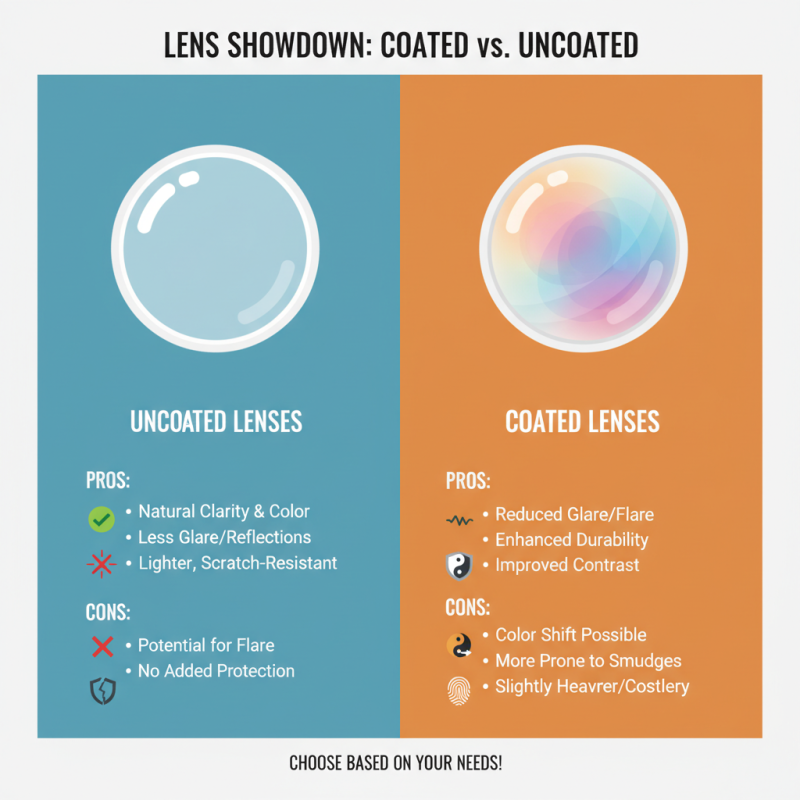
When considering lenses, uncoated and coated options present unique pros and cons. Uncoated lenses offer clarity and natural color reproduction. They are less likely to reflect light, which can be beneficial in certain situations, like low-light environments. The absence of coating can make them lighter and potentially less prone to scratches.
However, uncoated lenses do have drawbacks. They are usually more susceptible to glare and reflections from bright light sources. This can hinder visibility in bright conditions. Additionally, they may require more frequent cleaning, as smudges and dirt are more visible without coatings.
In contrast, coated lenses bring advantages like reduced glare and improved durability. The special coatings can enhance contrast and protect against scratches. They are particularly beneficial for outdoor activities where sunlight is a concern. However, coated lenses may sometimes distort colors or have a reflective quality that some users may find distracting. Balancing these factors is crucial when choosing the right lens for your specific needs.