Top 10 Presbyopia Lens Options for Global Buyers?
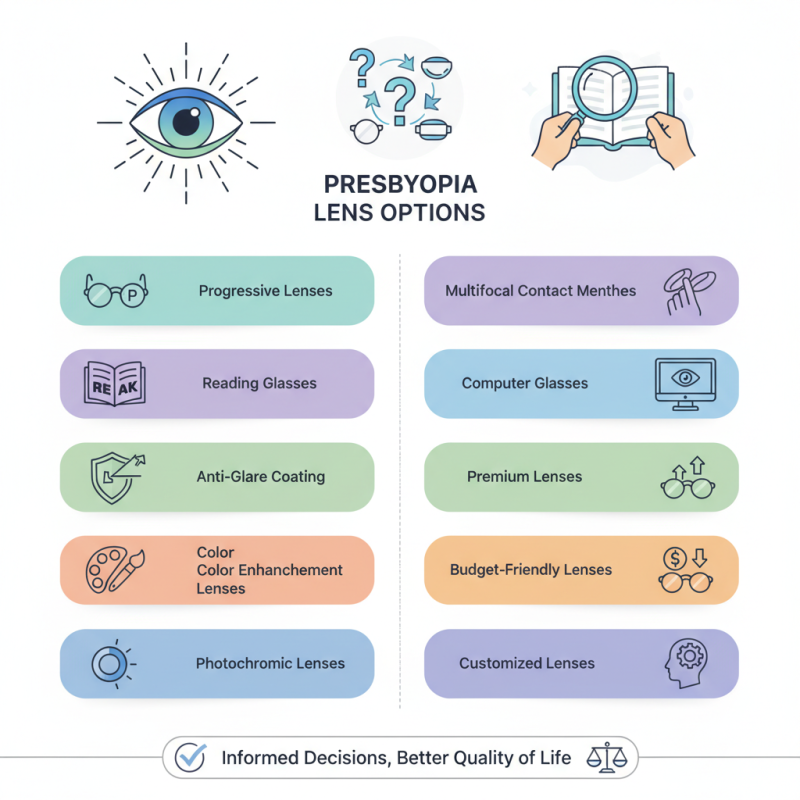
As we age, our vision changes. Many people face presbyopia, a condition that makes it difficult to focus on close objects. Finding the right presbyopia lens is crucial for maintaining everyday activities. This guide presents the top 10 presbyopia lens options for global buyers.
Choosing the right presbyopia lens can be overwhelming. Various designs and technologies exist. Not all lenses suit every individual. Factors such as lifestyle, occupation, and personal preferences matter. Some may prefer progressive lenses, while others opt for reading glasses. Understanding these choices is essential.
Each lens option has unique features. Some offer glare reduction, while others enhance color visibility. Price varies significantly, impacting accessibility for many consumers. It's vital to evaluate each option thoroughly. The goal is to find a comfortable lens that fits your needs. Making informed decisions ensures a better quality of life.
Top 10 Presbyopia Lens Options for Global Buyers
As presbyopia affects many adults over 40, selecting the right lenses is crucial. Various lens options cater to different visual needs and lifestyles. Understanding these choices can enhance vision clarity and overall quality of life.
One popular option is progressive lenses. They provide a seamless transition between distance and near vision. However, users may initially struggle with peripheral distortion. Some report headaches during adjustment, which can be frustrating. It's essential to consult an eye care professional for personalized guidance when choosing these lenses.
Consider bifocal lenses for straightforward tasks. They feature two distinct optical powers, helping with both near and distant viewing. However, users might feel limited due to the visible line separating the two areas. Adjusting to this divide may take time, highlighting the need for patience.
Tips: Always prioritize comfort and clarity when selecting lenses. A thorough eye examination ensures the right prescription. Don't hesitate to ask questions; understanding your needs will lead to better lens choices. Keep in mind various lens coatings that can enhance the longevity and performance of your lenses.
Understanding Presbyopia: Causes and Symptoms
Presbyopia is a common age-related vision condition. It typically emerges in people over 40. As we age, the lens in our eyes loses flexibility. This makes it hard to focus on close objects. According to the American Academy of Ophthalmology, nearly 128 million Americans are affected. More than half of adults aged 60 and older experience some form of presbyopia.
Common symptoms include difficulty reading small print and eye strain during close tasks. Many find it challenging to switch focus between different distances. Interestingly, nearly 90% of those with presbyopia are unaware of their condition until they notice significant changes. It's essential to consult with an eye care professional for a comprehensive eye exam. This evaluation can help confirm the diagnosis and explore appropriate solutions.
**Tips:** Regular eye check-ups are vital. They help identify any issues early. Eye exercises can also relieve some strain. Maintaining proper lighting while reading or working can make a difference. Remember, understanding your vision can enhance your daily life. Don't hesitate to seek guidance and explore lens options tailored to your specific needs.
Criteria for Selecting Presbyopia Lenses
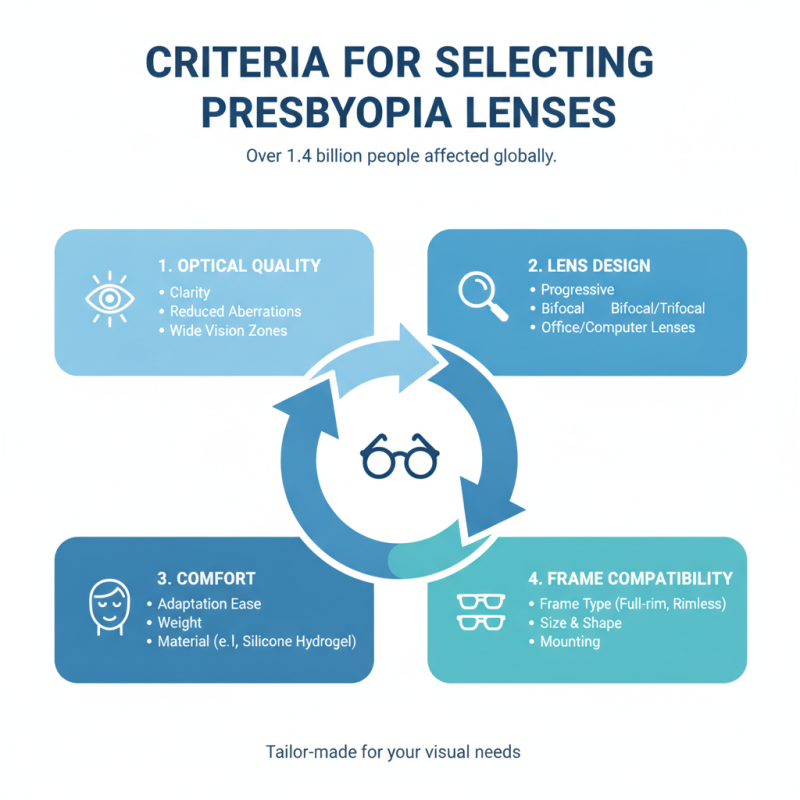
Choosing the right presbyopia lenses involves careful consideration. With over 1.4 billion people globally affected by presbyopia, it’s crucial to select lenses that cater to specific visual needs. Some key criteria include optical quality, design, comfort, and compatibility with frame styles.
Optical quality ranges vastly among options. As per industry data, high-definition lenses can provide sharper vision, especially for those who require multifocal corrections. The lens design also plays a significant role. Progressive lenses offer seamless transitions between distances, which many wearers prefer. On the other hand, bifocal lenses can be easier to adapt to for some users.
Tip: Always test lenses in-store. A brief trial can highlight comfort and clarity. Consider factors like frame fit and lens thickness as well. Comfort is more than just physical. Psychological comfort matters too, as adjusting to new lenses can be daunting.
Another important aspect is the lens material. Options like polycarbonate and high-index materials can reduce thickness but may vary in impact resistance. Remember, not all lens coatings are created equal. Some anti-reflective coatings can minimize glare, enhancing visual comfort, especially in bright environments.
Tip: Focus on your lifestyle. Consider where you spend most of your time and how lenses will fit into daily activities. A lens that excels in one setting may not perform as well in another. This reflection can guide you to a more satisfying choice.
Overview of Top Lens Brands for Presbyopia
As presbyopia affects a large segment of the population, understanding lens options is crucial. Many brands cater to this need, offering a diverse range of lenses designed for comfort and visual clarity. High-quality materials and advanced designs set these options apart. Users should look for features such as anti-reflective coatings and blue light filters, which can enhance their visual experience.
Specific lens types include progressives, bifocals, and single vision options. Each type serves a unique purpose. Progressives offer a seamless transition between distances, while bifocals focus on distinct sections for near and far vision. This variety can create confusion. Buyers may struggle to determine which suits their lifestyle best.
Also, it's essential to consider the lens's weight and thickness. Heavier lenses can lead to discomfort during extended wear. Many users report that finding the right fit can take time. It is a process of trial and error, which can be frustrating yet necessary for achieving the best vision correction. Each individual’s needs will differ, making professional guidance invaluable.
Comparative Analysis of Lens Types and Features
When it comes to presbyopia lenses, buyers face a variety of options. Each type offers unique features and benefits. This diversity can make choosing the right lens challenging. Some lenses cater to specific visual needs, while others provide a more general solution.
Single-vision lenses are straightforward and ideal for those needing help with close-up tasks. However, they lack versatility for different distances. Bifocal lenses, on the other hand, offer two distinct zones, allowing users to see far and near. This can lead to visible lines, which some find unappealing. Progressive lenses present a seamless transition between vision zones. They can be a more stylish option, yet may take time to adjust to.
Reflecting on the numerous lens types, it becomes apparent that personal preference plays a significant role. Users should consider lifestyle needs alongside visual correction. Not all lenses will work perfectly for everyone. Trial and adaptation periods can be necessary, as comfort and clarity vary widely. As you explore, keep in mind that what suits one person may not be ideal for another. Each choice comes with its own set of challenges and rewards.
Top 10 Presbyopia Lens Options for Global Buyers
| Lens Type |
Material |
Coating Options |
Benefits |
Drawbacks |
| Single Vision |
Polycarbonate |
Anti-Reflective |
Simple design, easy to adapt |
Limited use for multifocal needs |
| Bifocal |
CR-39 |
Scratch-Resistant |
Good for near and distance vision |
Visible line can be distracting |
| Progressive |
High Index |
Blue Light Filtering |
Seamless vision at all distances |
Adjustment period for new users |
| Photochromic |
Trivex |
Anti-Fog |
Adaptive to light conditions |
May not darken fully in cars |
| Digital/Occupational |
Polycarbonate |
Anti-Glare |
Designed for screen use |
Not suitable for all activities |
| Reading |
CR-39 |
UV Protection |
Great for reading |
Limited to close vision |
| Spherical |
High Index |
Mirror Coating |
Thin and lightweight |
Costly compared to other types |
| Aspheric |
Polycarbonate |
Hydrophobic |
Reduces distortion |
Higher cost |
| Trifocal |
High Index |
Anti-Fingerprint |
Multiple focal areas |
Most complex design |
| Customizable |
Various |
Personalized |
Tailored for individual needs |
More expensive |
Conclusion
In the article titled "Top 10 Presbyopia Lens Options for Global Buyers," the focus is on understanding presbyopia, its underlying causes, and its symptoms, which are crucial for appreciating the need for specialized lenses. The article outlines the essential criteria for selecting presbyopia lenses, such as material, design, and comfort, ensuring that users can make informed decisions tailored to their specific vision needs.
Additionally, the article provides a comparative analysis of various lens types and their unique features, helping readers distinguish between options available on the market. User reviews and experiences with presbyopia lenses are included to offer real-world insights into the performance and satisfaction levels associated with different products. Ultimately, this comprehensive overview aims to equip global buyers with the knowledge they need to select the most suitable presbyopia lens for enhancing their visual quality.