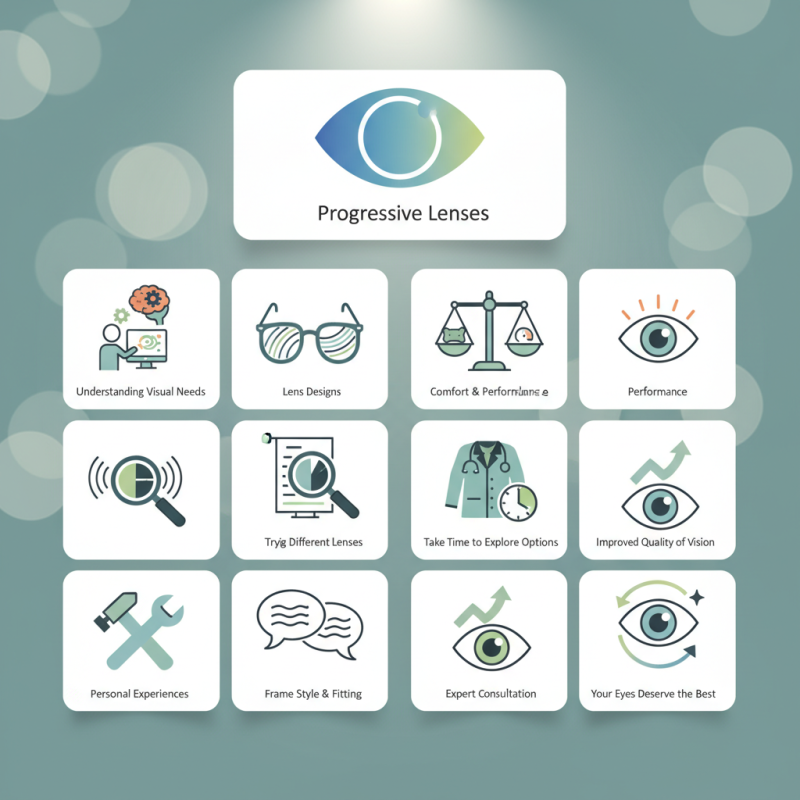
Choosing the right eyewear is crucial, especially when it comes to Progressive Lenses. Dr. Emily Foster, an optometry expert, emphasizes, "Finding the right progressive lenses can dramatically improve your quality of vision." This statement highlights the importance of selecting lenses that fit your specific needs.
Progressive Lenses provide a seamless transition between different vision zones. However, not all progressive lenses are created equal. Understanding your visual demands is essential. For instance, if you spend long hours in front of a computer, specific lens designs will suit you better. It can feel overwhelming with the many options available, and not everyone may get it right on their first try.
Consider trying different lenses before settling on a choice. Many factors influence the performance of Progressive Lenses, including the frame style and fitting. Reflection on personal experiences with lenses can also guide you. Striking a balance between comfort and performance is necessary but not always straightforward. Your eyes deserve the best, so take the time to explore your options.
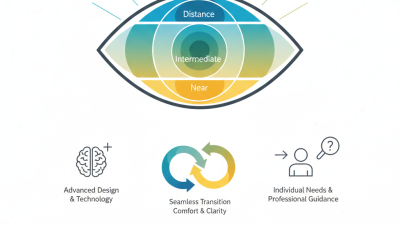
Progressive lenses are a popular choice for many who require vision correction. They provide a seamless transition between multiple focal points. This allows users to see clearly at all distances—near, intermediate, and far. Unlike traditional bifocals, progressive lenses do not have visible lines. This design offers a more natural visual experience.
One significant benefit of these lenses is their versatility. Individuals who read, work on computers, and drive can all benefit. However, adapting to progressive lenses can take time. Some users report feeling dizzy or disoriented initially. It's crucial to give yourself time to adjust.
When considering progressive lenses, consulting an eye care professional is essential. They can provide personalized recommendations based on your vision needs. Take the time to choose frames that complement the lens design. The right fit can enhance comfort and performance. Different lens designs cater to various lifestyles. It’s important to reflect on your daily activities before making a decision.
| Tip | Description | Benefit |
|---|---|---|
| Understand Your Prescription | Know the specific visual needs outlined by your eye care professional. | Ensures accurate lens tailoring for your vision. |
| Choose the Right Frame | Select frames that fit comfortably and complement lens design. | Improves lens performance and overall aesthetics. |
| Consider Lens Material | Evaluate options like polycarbonate or high-index lenses based on lifestyle. | Provides durability and lightweight comfort. |
| Check for Bifocal versus Progressive | Understand the differences to choose what fits best for your needs. | Ensures an optimized visual experience. |
| Look for Customization Options | Explore customized fitting options for progressive lenses. | Enhances comfort and visual clarity. |
| Consider Lens Coatings | Choose from anti-reflective, scratch-resistant, and UV coatings. | Improves lens longevity and visual comfort. |
| Seek Professional Guidance | Consult your optician for recommendations on lens choices. | Ensures the best fit for your unique requirements. |
| Test Drive Your Lenses | Use demo lenses to see how they work for you. | Allows you to adjust before finalizing your choice. |
| Learn About Adaptation Time | Understand that acclimatization to progressive lenses may take time. | Facilitates a smoother transition to new lenses. |
| Monitor Your Vision Needs | Keep track of any changes in vision and discuss them with your eye care provider. | Ensures that your prescriptions remain accurate. |
When selecting progressive lenses, several factors significantly influence your choice. First, consider your
lifestyle. If you're active, you need robust lenses that can withstand wear. Your visual needs matter too.
Whether you read, work at a computer, or drive frequently affects what type of lens design suits you best. Each activity requires different focal lengths,
and it's essential to find a pair that accommodates all of them.
Next, think about the frame style. Selecting the right frame is just as crucial. It can affect how the lenses perform
and fit your face comfortably. High-position frames may increase the field of view, while low-position frames can restrict vision quality. Additionally, be wary of
the lens material. Thinner, lighter lenses are often preferred, but they may cost more. Balance comfort with budget.
Lastly, whether to choose standard or custom progressive lenses is important. Custom lenses provide a tailored vision
experience but might take longer to produce. Reflect on your habits and needs to ensure the best long-term fit. Ultimately, finding the perfect pair requires
a blend of personal preference and professional advice.
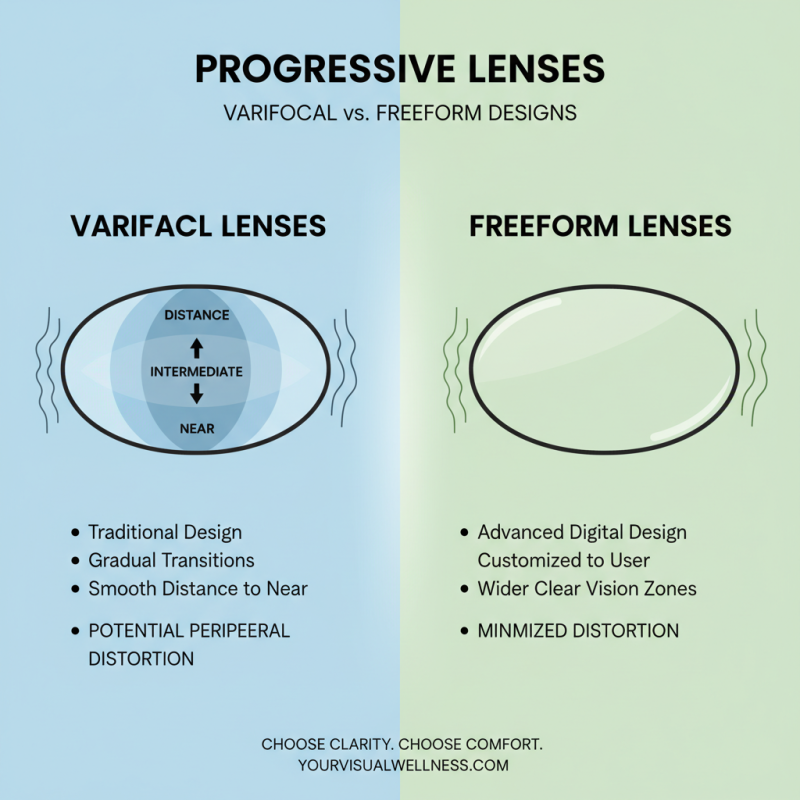
When selecting progressive lenses, understanding the design options is crucial. Varifocal lenses, commonly used, offer a traditional approach. These lenses provide gradual transitions between prescriptions. They adjust from distance to near vision smoothly. However, users might experience some peripheral distortion. This can be distracting, particularly for those who aren’t accustomed to multifocal lenses.
Freeform lenses are a modern alternative. These lenses are customized to the wearer’s prescription and frame choice, enhancing visual clarity. They can minimize distortions due to their advanced design technology. Yet, adapting to freeform lenses may take longer for some users. The cost is often higher, so it's wise to evaluate your budget.
When choosing lenses, consider your daily activities. Think about where you'll need the most visual support. If you read a lot, prioritize near vision clarity. This will help you narrow down which type suits your lifestyle best. It's key to consult with an eyewear professional for personalized guidance. They can help you analyze your needs and preferences effectively. Adjusting to new lenses takes time. Remain patient as you find what works best for you.
Proper lens fitting and measurements are crucial for maximizing the performance of progressive lenses. These lenses allow wearers to see clearly at various distances. However, if they are not fitted accurately, the wearer may struggle with discomfort or blurred vision. According to a study by the American Optometric Association, nearly 30% of people experience issues with their progressive lenses due to poor fitting.
An accurate measurement is key. This includes frame size, pupil distance, and fitting heights. An inconsistency in these measurements can lead to visual distortions. Research shows that misaligned progressive lenses can cause dizziness or eyestrain in 50% of wearers. The complexity of progressive lens design makes it essential for optometrists to take precise measurements during the fitting process.
Customization is also necessary. Each person has unique visual needs. This means that even slight variations in measurement can lead to significant differences in comfort and clarity. In some cases, a client may require adjustments after initial fitting. These adjustments are common, yet essential for achieving optimal performance and satisfaction with progressive lenses. Regular follow-ups can enhance the wearing experience.
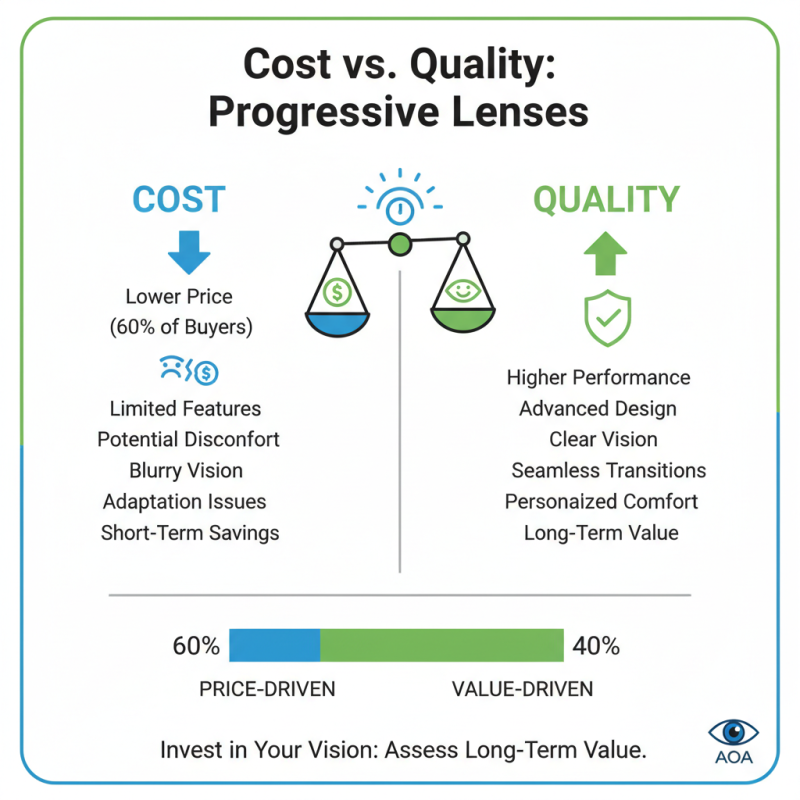
When purchasing progressive lenses, evaluating cost versus quality is crucial. According to the American Optometric Association, about 60% of lens wearers consider price as a primary factor. However, focusing solely on cost may lead to dissatisfaction in the long run. Cheaper lenses often compromise on features, leading to discomfort and blurry vision.
Quality progressive lenses typically have advanced features such as customized fittings and better materials. A recent study shows that users of high-quality lenses experience 35% less eye strain. Investing in premium lenses enhances the overall user experience. It's essential to understand that while high-quality options come at a higher price, they often provide better visual clarity and comfort.
Not all expensive lenses offer exceptional value. Some may have unnecessary features that don’t benefit the user. Assessing your needs is vital. If you spend most of your time at a computer, specific lens options may be required. Reflect on your daily activities. It helps in finding a balance between cost and the essential features you need.