2026 How to Choose the Right Progressive Lenses for Your Vision Needs?
Choosing the right progressive lenses can significantly enhance your visual experience. Progressive lenses are designed to provide seamless vision correction for multiple distances. Whether you struggle with reading, computer work, or seeing far away, these lenses may be the solution.
Understanding your specific vision needs is crucial when selecting progressive lenses. Not all lenses are created equal, and individual differences matter a great deal. Prescription accuracy, lens features, and fitting techniques play vital roles in your overall satisfaction.
However, finding the perfect progressive lenses can feel overwhelming. Many options exist, which can confuse even experienced wearers. You may even find yourself questioning if you made the right choice. It's essential to seek expert guidance and consider your lifestyle when making a decision. This way, you can enjoy the comfort and clarity that progressive lenses offer.
Understanding Progressive Lenses: Key Features and Benefits
Progressive lenses offer a versatile solution for various vision needs. They provide multiple focal points within a single lens, allowing clear vision for distance, intermediate, and near tasks. The seamless transition between these zones is a major benefit. Patients often describe them as a game-changer for reading and computer work.
Understanding the key features can guide your choice. The design of the lens impacts visual comfort. Some lenses have wider reading areas, while others may suit distance viewing better. It's crucial to consider your daily activities when selecting. Many users report a learning curve with progressive lenses. Patience is key during this adjustment phase.
Quality matters when it comes to progressive lenses. An experienced optician will ensure the lenses fit your specific prescription and lifestyle. Manufacturer reputation is also important. Look for trusted providers with good reviews. The right choice can enhance your quality of life significantly.
Remember, the journey to finding the perfect lenses may require some trial and error, and that's okay.
Types of Progressive Lenses: Standard vs. Premium Options
Choosing the right progressive lenses can be daunting. Understanding the key differences between standard and premium options is essential. Standard progressive lenses often come with basic features. They provide a smooth transition for vision at various distances. According to the American Optometric Association, about 70% of users prefer these lenses for their affordability. However, they may struggle with peripheral distortion.
Premium progressive lenses enhance the experience significantly. They offer advanced design features, such as wider viewing zones and customized fit. A report by the Vision Council indicates that 60% of wearers notice improved clarity with premium lenses. This option caters to individual needs, which is crucial for daily tasks. From reading to driving, vision clarity is vital, especially as we age.
Consider potential downsides when choosing lenses. Not every eye care professional may recommend premium options. Some may find the price point challenging. Additionally, first-time users of progressive lenses might take longer to adapt. Engaging in discussions with your optometrist about personal vision goals can guide you towards the best choice for your needs.
2026 How to Choose the Right Progressive Lenses for Your Vision Needs? - Types of Progressive Lenses: Standard vs. Premium Options
| Lens Type |
Description |
Price Range |
Ideal For |
| Standard Progressive Lenses |
Basic lens design offering smooth transition between different vision zones. |
$200 - $400 |
First-time progressive wearers or budget-conscious customers. |
| Premium Progressive Lenses |
Advanced lens design with wider reading and distance zones, offering better clarity. |
$400 - $800 |
Experienced wearers or those needing enhanced vision quality. |
| Variable Progressive Lenses |
Customizable lens design that can adjust based on daily activities. |
$300 - $600 |
Active individuals who switch between different activities frequently. |
| Photochromic Progressive Lenses |
Lenses that darken in sunlight, providing UV protection and comfort. |
$350 - $750 |
Those who spend time outdoors and need versatile lenses. |
Evaluating Frame Compatibility for Optimal Progressive Lens Fit
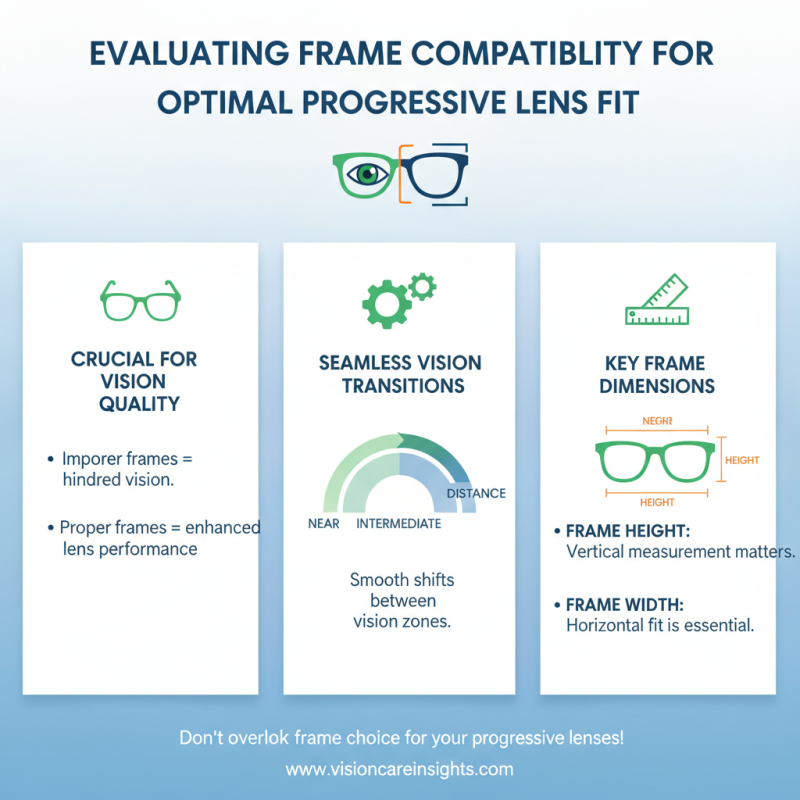
When selecting progressive lenses, frame compatibility is crucial. Studies show that improper frame choice can hinder vision quality. The right frame can enhance lens performance, ensuring seamless transitions between different vision zones. People often overlook frame height and width, which are critical for optimal lens fitting.
According to a report by the American Optometric Association, around 30% of wearers experience discomfort due to poorly fitted frames. A frame that is too narrow may limit the visual field, while an excessively wide frame can lead to imbalance. Finding a balance in frame size is essential for maximizing comfort and visual efficiency.
In a recent survey, 25% of users mentioned dissatisfaction with their lenses, primarily due to incompatibility issues with their selected frames. Addressing this mismatch often requires a detailed consultation with an eye care professional. They can guide you in choosing a frame that complements your lifestyle and vision needs. It’s worth reflecting on common mistakes people make when selecting frames. A little research and expert advice can make a significant difference in your overall vision experience.
Assessing Your Vision Needs: Near, Intermediate, and Distance Viewing
When choosing progressive lenses, it's vital to evaluate your specific vision needs. Each person may have different requirements for near, intermediate, and distance viewing. For example, individuals who love reading might prioritize near vision, while others who work at a computer need enhanced intermediate focus.
Understanding your daily activities can guide your decision. If you frequently switch between reading, using digital devices, and driving, a balanced lens might be ideal. However, some users struggle with the adaptation period associated with progressive lenses. This can lead to frustrations, like discomfort or difficulty in finding the right focus.
Seek advice from eye care professionals who can help examine your lifestyle and preferences. They can recommend options that align with your needs. Hearing experiences from others can also shed light on potential challenges. Every individual’s experience with progressive lenses is unique, and reflecting on these stories may reveal insights to navigate your journey toward better vision.
Expert Tips for Selecting the Best Lens Material and Coatings
Choosing the right progressive lenses can be challenging. Knowing about lens materials and coatings is crucial. According to the American Optometric Association, nearly 65% of people over 40 require vision correction. Understanding your options helps ensure you find a solution that meets your specific needs.
When selecting lens materials, consider your lifestyle. Polycarbonate lenses are lightweight and impact-resistant, making them ideal for active individuals. However, they can scratch easily without proper coatings. High-index lenses are thinner but may come at a higher cost. A research report from the Vision Council notes that 78% of consumers underestimate the benefits of lens coatings. Anti-reflective coatings enhance clarity and reduce glare, which is beneficial for night driving.
Coatings are essential for longevity and comfort. Some coatings repel water and dust, while others minimize smudging. According to a survey, 50% of people experience frustration with dirty lenses. It’s essential to consider how often you clean your glasses and how that affects your choices. People often overlook the importance of UV protection. Even lenses that seem clear should block harmful rays. Achieving optimal vision requires a thoughtful approach to both lens that balances comfort and functionality.