Choosing among the top Progressive Lenses manufacturers and suppliers requires more than comparing brand names. A premium lens can still perform poorly when the fitting height is wrong, the frame sits unevenly, or the corridor does not match the wearer’s daily tasks. Experienced opticians check monocular pupillary distance, pantoscopic angle, vertex distance, and frame stability before recommending a design. Small measurements matter.
Optical educator Mo Jalie has emphasized, “The best progressive lens is the one that is properly fitted and dispensed.” This practical view remains valuable when reviewing global suppliers. Leading companies often invest in digital surfacing, personalized corridor designs, thinner materials, and stronger quality-control systems. However, product claims deserve careful testing. Marketing language is not independent evidence. A supplier’s reputation should be examined through prescription accuracy, remake policies, delivery consistency, technical support, and documented wearer feedback.
There is no universal winner.
A driver may need a wide distance zone and reduced glare. An office worker may prefer a broader intermediate area for a monitor positioned 60 centimeters away. Outdoor users may value impact-resistant materials and stable coatings. These needs can conflict, and even experienced professionals sometimes adjust their recommendations after real-world feedback. That limitation matters. This guide compares prominent Progressive Lenses manufacturers and suppliers through practical performance, professional credibility, customization options, and service reliability. The goal is not to promote the most familiar logo. It is to identify partners that consistently connect lens engineering with careful dispensing and measurable wearer comfort.
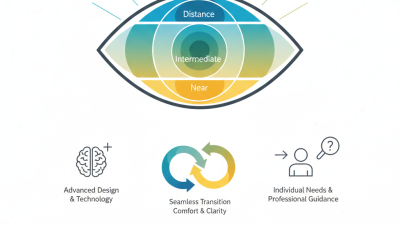
Progressive lenses are multifocal lenses with no visible dividing line. They provide distance, intermediate, and near vision in one pair. Their power changes gradually from the upper lens to the lower lens. The top supports road signs and television. The middle helps with computer screens. The bottom assists reading and close work.
This design works through a carefully calculated progression zone, often called the corridor. Lens manufacturers use prescription data, frame measurements, and digital surface technology to shape this zone. An optician also checks fitting height, pupillary distance, frame position, and wearing angle. Small errors can affect comfort. The corridor matters. Clear vision depends on accurate measurements, not only lens material.
New wearers may notice mild blur near the edges or difficulty finding the clearest area. Head movement becomes more important than eye movement, especially when reading or walking downstairs. Adaptation takes time. In practice, a well-designed lens can feel natural after several days, but not every wearer adjusts equally. Suppliers should provide verified specifications, consistent quality control, and fitting support. The most advanced design on paper may still feel unsuitable if the prescription, frame, or daily tasks are misunderstood. A second fitting review is sometimes necessary.
Progressive lens manufacturers should be compared by measurable performance, not advertising language. Start with corridor design, fitting tolerance, and peripheral distortion control. A wider intermediate zone may help office users, while a stable distance zone suits frequent driving. Ask whether the supplier verifies fitting height, monocular PD, pantoscopic tilt, and vertex distance. These details can change the final visual experience.
Material quality also matters. Compare impact standards, coating durability, UV protection, and available prescription ranges. ISO 8980-2 provides requirements for progressive ophthalmic lenses, but compliance alone does not guarantee comfort. The World Health Organization’s World Report on Vision estimates that at least 2.2 billion people have vision impairment worldwide. Better measurement and follow-up remain essential. No lens design works perfectly for every wearer. That is easy to forget.
Tips: Request corridor maps, adaptation data, remake policies, and sample lenses before selecting a supplier. Check whether digital surfacing equipment supports individualized parameters. Review laboratory consistency, delivery records, and technical support. A lower price may become expensive after repeated remakes. Also, compare warranty terms carefully. Some suppliers provide impressive specifications but limited practical guidance. A small trial can reveal more than a long brochure.
Progressive lens manufacturers differ in how they balance visual comfort, customization, and production accuracy. Leading manufacturers usually invest in free-form digital surfacing, which places optical power across the lens with greater precision. Their strongest products often provide smoother transitions between distance, intermediate, and near vision. This matters when a wearer moves from driving to reading a phone.
Some manufacturers focus on highly personalized lenses. They use measurements such as fitting height, pantoscopic tilt, vertex distance, and frame position. These details can reduce unwanted blur near the lens edges. Advanced suppliers may also offer occupational designs for offices, workshops, or long hours of screen use. The best choice depends on daily tasks, not marketing language.
Quality control remains essential. Reliable manufacturers inspect surface accuracy, coating adhesion, tint consistency, and prescription conformity. Experienced suppliers also provide fitting guidance and remake policies for unresolved adaptation problems. Yet no design suits everyone. A wider viewing zone may reduce corridor length, but it can require careful adjustment. Even a technically strong lens may feel uncomfortable in a poorly fitted frame. That is a practical limitation worth acknowledging.
Opticians should compare corridor options, material choices, coating performance, and verification reports before ordering. Independent measurements can reveal small errors that affect comfort. Clear communication between the laboratory, supplier, and eye-care professional often matters as much as the lens design itself.
| Supplier Profile | Primary Product Strength | Common Lens Materials | Available Refractive Indices | Progressive Design Options | Coating and Surface Options | Typical Production Capability | Relevant Quality and Compliance Areas | Best-Fit Customer Requirements |
|---|---|---|---|---|---|---|---|---|
| Profile A Premium design specialist |
Advanced personalization and smooth progression | 1.50 1.56 1.60 1.67 1.74 | 1.50 to 1.74, depending on prescription, material, and design availability | Fully personalized corridor length, fitting height, pantoscopic angle, wrap angle, and vertex-distance compensation | Hard coating, anti-reflective coating, hydrophobic top coat, and optional blue-light filtering | Digital free-form surfacing with prescription-specific optimization and remote-domiciliary design support | Optical power accuracy, surface quality, coating adhesion, impact testing where required, and traceability procedures | High-end optical practices, demanding prescriptions, and wearers seeking broader usable zones |
| Profile B High-volume international supplier |
Broad product range and scalable supply | 1.50 1.56 1.60 1.67 | 1.50 to 1.67 across standard single-vision, progressive, and occupational families | Entry, standard, enhanced, and personalized progressive designs with multiple corridor lengths | Scratch-resistant hard coat, standard anti-reflective, premium anti-reflective, UV protection, and hydrophobic finishes | Large-scale prescription processing, semi-finished lens inventory, and multi-market order fulfillment | Documented production controls, prescription verification, batch traceability, and market-specific labeling | Retail chains, optical laboratories, and distributors requiring consistent availability and wide coverage |
| Profile C Value-oriented laboratory supplier |
Competitive pricing for everyday prescriptions | 1.50 1.56 1.60 | 1.50 to 1.60, with selected higher-index options in limited design ranges | Standard progressive designs, short-corridor options, and basic occupational designs | Standard hard coat and entry-level anti-reflective coating; optional UV protection | Digital surfacing for standard prescriptions and batch production for frequently ordered designs | Basic optical inspection, coating inspection, prescription checking, and packaging traceability | Independent optical stores, budget-conscious programs, and routine low-to-moderate prescriptions |
| Profile D Specialty high-index supplier |
Thin and lightweight solutions for stronger prescriptions | 1.60 1.67 1.74 | 1.60 to 1.74, subject to prescription range, frame geometry, and lens diameter | High-index progressive designs, compensated designs for high prescriptions, and selected short corridors | High-performance anti-reflective coating, oleophobic or hydrophobic top coat, and enhanced scratch resistance | Thin-lens optimization using minimum-edge or minimum-center-thickness calculations and digital surfacing | Prescription verification, thickness control, coating durability checks, and applicable impact standards | High myopia, high hyperopia, premium frames, and customers prioritizing lens thickness reduction |
| Profile E Occupational lens specialist |
Near and intermediate visual performance for work environments | 1.50 1.56 1.60 Polycarbonate | Commonly 1.50 to 1.60; availability depends on occupational design and prescription | Office, computer, room, indoor, and extended-intermediate designs with shortened distance zones | Anti-reflective coating, hard coat, UV protection, and optional glare-reduction treatments | Digital free-form production with task-specific corridor selection and working-distance optimization | Optical power control, fitting-reference verification, coating inspection, and material-specific testing | Office workers, laboratory personnel, designers, retail staff, and users with intensive screen or near tasks |
| Profile F Safety and active-lifestyle supplier |
Impact-resistant materials and durable everyday performance | Polycarbonate Trivex-type material 1.60 | Material availability varies; impact-resistant options are commonly offered in 1.53 to 1.59 ranges | Standard and personalized progressive designs, including selected sports and wrap-compatible options | Hard coat, anti-reflective coating, UV protection, hydrophobic treatment, and optional tinting | Impact-resistant lens processing, sports-frame compatibility, bevel and edge control, and digital surfacing | Impact testing where applicable, optical verification, coating adhesion, and material traceability | Outdoor users, active lifestyles, children’s eyewear, safety-oriented applications, and durable frame programs |
| Profile G Custom laboratory and private-label supplier |
Flexible customization and OEM-ready production | 1.50 1.56 1.60 1.67 | 1.50 to 1.67, with selected materials and indices available by project specification | Custom corridor lengths, fitting parameters, branded design families, and application-specific layouts | Custom hard coat and anti-reflective specifications, UV filtering, tinting, and packaging options | Small- to medium-batch digital surfacing, sample approval workflows, and customized order interfaces | Defined inspection plans, sample retention, lot traceability, labeling control, and customer-specific documentation | Distributors, optical laboratories, private-label programs, and buyers requiring customized product portfolios |
Note: Refractive-index availability, prescription limits, coating combinations, impact performance, and regulatory documentation vary by material, design, market, and supplier specification. Buyers should confirm the current technical data sheet before placing an order.
Top Progressive Lenses Manufacturers and Suppliers?
Reliable progressive lens suppliers do more than produce finished lenses. They help optical businesses manage prescriptions, fitting data, inventory, and customer expectations. The World Health Organization’s World Report on Vision estimates that at least 2.2 billion people have near or distance vision impairment. It also identifies more than 1 billion cases that could have been prevented or remain unaddressed. This creates strong demand for practical, accurately fitted progressive solutions.
Suppliers support this demand through digital measurement tools, fitting guides, and technical consultation. A precise pupillary-distance measurement can reduce adaptation problems at the dispensing counter. Suppliers may also provide lens designs for office work, driving, or heavy screen use. These options help optical teams match products to daily habits, not only prescription strength. Training matters, too. A sales assistant who understands corridor length can explain why two lenses with similar prescriptions may feel different.
The International Agency for the Prevention of Blindness reports that uncorrected presbyopia affects hundreds of millions of people worldwide. That figure shows the commercial opportunity, but it also raises responsibility. Poor communication can lead to unnecessary remakes and disappointed customers. Suppliers should offer transparent warranty terms, traceable quality checks, and responsive after-sales support. ISO 21987 provides guidance for mounted spectacle lenses, yet compliance alone cannot solve every fitting issue. The model is not perfect. Real-world face shapes, posture, and working distances still require careful judgment.
Choosing a progressive lens supplier requires more than comparing prices. The supplier’s technical experience affects every wearer’s daily comfort. Ask how long the company has produced progressive designs and which prescriptions it supports. Request sample lenses for distance, intermediate, and reading zones. A practical trial can reveal distortion near the corridor, especially when the wearer turns their head.
Examine the supplier’s manufacturing controls. Reliable facilities should verify lens power, surface accuracy, coating adhesion, and frame compatibility. Ask whether each order receives a traceable inspection record. Clear documentation matters when a prescription needs adjustment. The supplier should also explain its fitting measurements, including pupillary distance, fitting height, and pantoscopic angle. Small measurement errors can create large visual complaints.
Communication is another important test. Can the technical team answer questions without vague promises? Check response times, remake policies, delivery schedules, and protection against coating defects. Strong suppliers provide written procedures rather than relying on informal messages. However, no supplier is flawless. I once underestimated the value of after-sales support because the first sample looked excellent. Later, a complex prescription exposed slow problem solving. That experience changed my evaluation method. I now compare sample quality, technical advice, production consistency, and service recovery together. A lower quotation may seem attractive, but inconsistent measurements can increase remakes and frustrate both optical staff and wearers. Ask difficult questions early. Review the answers carefully.
Abbe value indicates optical dispersion: higher values generally mean less chromatic aberration. When comparing progressive lens suppliers, review material index, optical quality, coating performance, customization capability, and production consistency rather than price alone.
Values shown are typical reference values for commonly used ophthalmic lens materials. Exact specifications may vary by formulation, design, and manufacturer.