How to Choose the Best Presbyopia Lens for Your Needs?
As we age, our vision often changes. According to the Vision Council, over 128 million Americans will experience some degree of presbyopia by 2025. This common condition makes it challenging to focus on near objects. Hence, choosing the right Presbyopia Lens becomes crucial for daily activities.
Selecting an appropriate lens can improve quality of life significantly. Different lens types cater to various needs, from bifocals to progressive lenses. Each option offers unique benefits, but they also come with considerations. A safe choice aligns with personal vision habits and lifestyle. Research shows that more than 70% of users notice enhanced clarity after finding the right lens.
Yet, the process isn't always straightforward. Many people face confusion due to overwhelming choices. Not all presbyopia solutions suit everyone. Thus, understanding your specific vision requirements is vital. Engage with eye care professionals who can provide expert advice based on your needs. This collaboration can lead to better outcomes and a more satisfying visual experience.

Understanding Presbyopia: Causes and Effects on Vision
Presbyopia is a common vision condition that typically affects individuals over the age of 40. It results from the natural aging process of the eye. The lens becomes less flexible, making it difficult to focus on close objects. This can manifest as trouble reading small print or experiencing eye strain when working at close distances. The gradual change can be frustrating and may lead to a reliance on reading glasses or multifocal lenses.
Understanding the effects of presbyopia goes beyond just recognizing the symptoms. It can significantly impact daily activities, from reading a menu to using a smartphone. Many people find themselves adjusting their posture or holding reading materials further away. These adaptations are attempts to cope with the loss of near vision. Seeking professional guidance is critical, as a proper eye examination can provide clearer options tailored to individual needs. The experience of living with presbyopia may vary greatly, prompting reflections on how to maintain visual comfort in everyday life.
Types of Presbyopia Lenses: Options and Features Explained
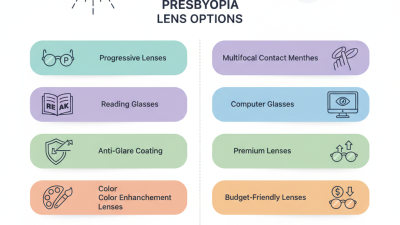
When choosing presbyopia lenses, understanding the available types is crucial. Multifocal lenses can provide clear vision at varying distances. These lenses often have distinct zones for near and far vision. You may feel some discomfort adjusting to these. It takes time and patience to adapt.
Single vision lenses are another option. They focus on one distance only, usually for reading. They can feel less complex but might require you to switch glasses for different tasks. Think of how you'll use them daily. Factor in your activities.
Progressive lenses are gaining popularity. They offer a smooth transition between different vision zones. Users appreciate the convenience, but the learning curve can be steep. Some find the peripheral vision awkward initially. Exploring these details can help you make an informed choice.
How to Choose the Best Presbyopia Lens for Your Needs?
| Lens Type |
Description |
Advantages |
Considerations |
| Bifocal Lenses |
Lenses with two distinct optical powers, typically for distance and near vision. |
Clear vision at two distances, easy transition. |
Visible line on lens, limited intermediate vision. |
| Trifocal Lenses |
Lenses with three sections for distance, intermediate, and near vision. |
Suitable for users needing multiple vision ranges. |
May be more difficult to adjust to. |
| Progressive Lenses |
Lenses that provide a smooth transition between all vision zones without lines. |
Convenient for all distances, aesthetic appearance. |
May take time to adjust, can be more expensive. |
| Reading Glasses |
Single vision lenses designed specifically for reading. |
Affordable, easy to use for close tasks. |
Not suitable for distance vision; can be inconvenient to switch. |
| Occupational Lenses |
Custom lenses tailored for specific tasks such as computer use. |
Designed for specific working distances, reduces eye strain. |
May not be suitable for all activities outside of work. |
Key Factors to Consider When Choosing Presbyopia Lenses
Choosing the right presbyopia lenses can greatly enhance your vision. When making a decision, consider the type of lens that fits your lifestyle. Progressive lenses offer a seamless transition between different vision zones. They are ideal for people constantly moving between distances. However, they may take time to adjust to, which can be frustrating.
Another important factor is the lens material. High-index lenses are thinner and lighter. They are perfect for those with stronger prescriptions. Additionally, lens coatings can improve durability and reduce glare. Some coatings can also resist scratches, which is crucial for maintaining clarity over time.
Don't overlook the importance of professional guidance. An eye care specialist can offer insights tailored to your needs. They may suggest a specific lens based on your daily activities or hobbies. It’s essential to communicate your preferences clearly. Remember, the perfect lens for someone else might not be right for you. Take your time to explore options and ensure you feel comfortable with your choice. Every pair of lenses is a step towards better vision, but the right fit varies by individual.
Consultation with Eye Care Professionals: Importance and Approach
When selecting presbyopia lenses, consulting eye care professionals is crucial. They possess the expertise needed to assess your vision needs accurately. Studies show that a significant number of patients do not get appropriate evaluations. Many overlook that personalized recommendations can greatly enhance comfort and clarity.
During the consultation, be prepared to discuss your lifestyle. Do you work at a computer? How often do you read? These factors influence lens choice. A recent survey revealed that 70% of patients felt less satisfied with lenses that were not tailored to their activities. Eye care professionals can perform tests to determine your exact prescription and suggest lens types.
Tip: Bring a list of questions to your appointment. This will help you clarify your doubts. Consider asking about the benefits of different lens designs.
Also, remember that not all lenses are right for everyone. Be open to trying multiple options. A successful consultation might involve adjustments to your initial preferences. Understanding that your ideal lens may evolve over time will help in your journey.
Tip: Keep in mind that regular follow-ups are essential. They ensure that your lenses remain suitable as your vision changes.
Trial and Adjustment: Finding the Perfect Fit for Your Lenses
Finding the right presbyopia lens can be a journey. Many people might expect a quick solution. However, it often requires time and patience. Different lifestyles and visual demands mean a one-size-fits-all approach rarely works. Each individual's needs are unique, and this is where trial and adjustment come into play.
When trying on lenses, focus on how they feel in daily situations. Read a book, use a smartphone, or drive. Do the lenses offer clear vision at all distances? If not, adjustments may be necessary. Sometimes, the lens curvature or material may not suit your face shape or prescription. This is normal. Not every lens will feel right initially, and that's okay.
Consider keeping a diary of your experiences. Document what works and what doesn’t. Share this with your eye care professional. They can help refine your choice. Remember, it’s about finding your perfect fit. It might take time, but the result will be worth it.