
Plastic Lens demand is expanding across automotive cameras, consumer electronics, medical devices, and precision eyewear. Grand View Research’s Optical Lenses Market report identifies imaging systems and vehicle safety technologies as important growth areas. Fortune Business Insights also connects optical component demand with rising camera integration and advanced sensing applications.
Market growth alone does not guarantee dependable sourcing. A buyer must examine resin grade, optical transmission, surface hardness, molding accuracy, coating durability, and batch consistency. Small defects matter. A faint flow mark can distort an image. Poor coating adhesion may become visible after repeated cleaning. These details separate a capable manufacturer from a low-cost producer.
Dr. Joseph E. Greivenkamp, an optical engineering educator and author, describes optical design as “both an art and a science.” His observation applies directly to Plastic Lens production. Computer simulations are valuable, but experienced engineers still interpret shrinkage, birefringence, and tool-wear risks. This guide reviews ten manufacturers serving global buyers, considering technical capability, quality systems, customization, production scale, and export experience. Sources include Grand View Research, Fortune Business Insights, company certifications, product documentation, and publicly available manufacturing information. Buyers should verify current certificates and test results independently. Supplier rankings can change. Data may be incomplete. That is worth admitting.
A practical evaluation should also include sample approval, dimensional reports, coating tests, and clear communication during tooling development. The best supplier is not always the largest. It is often the one that documents performance honestly and responds quickly when a design needs improvement.

What Defines a Leading Plastic Lens Manufacturer in China
A leading plastic lens manufacturer combines optical accuracy with repeatable production. Injection molding must control temperature, pressure, and cooling time. Small changes can create warpage, haze, or unwanted birefringence. Experienced engineers test PMMA, polycarbonate, and optical-grade resins before mass production.
Independent data supports this demand. The PlasticsEurope 2024 report recorded 413.8 million tonnes of global plastics production in 2023. However, lens manufacturing needs far tighter control than ordinary plastic processing. A capable factory should provide coating adhesion results, transmission data, dimensional reports, and batch traceability. ISO 9001 certification helps, while ISO 10110-based drawings improve technical communication. These documents matter more than polished sales language.
Tips: Ask for samples from different production batches. Measure clarity, diameter, edge thickness, and coating durability. Request humidity and temperature test records. A supplier that shares raw data earns more trust. Still, certification alone proves little. Some factories may show excellent samples but weak process control. That risk deserves attention. My own view is imperfect: the lowest quotation can look efficient, yet hidden rejects, delayed tooling, and inconsistent coating may cost more later. Visit the production floor when possible. Check whether operators record defects, not only finished quantities. Leading manufacturers usually explain failures clearly and adjust processes with evidence. They do not promise perfection. They demonstrate control.
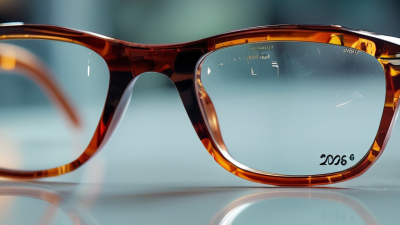
Global buyers comparing plastic lens suppliers should begin with measurable optical performance, not a polished catalogue. The World Health Organization’s World Report on Vision estimates that at least 2.2 billion people live with near or distance vision impairment. That scale makes consistency essential. Request lens samples, transmission curves, Abbe values, refractive-index data, and dimensional tolerances. Test several batches. One sample proves very little.
Manufacturing evidence matters as much as laboratory numbers. Check compliance with ISO 8980-1 for finished spectacle lenses and ISO 14889 for basic safety and performance requirements. Ask for coating adhesion, abrasion, impact, and ultraviolet-transmission test records. Independent laboratory reports carry more weight than supplier-created spreadsheets.
Review calibration dates too. Small details expose weak systems. A supplier with clean certificates may still struggle with production variation.
Commercial evaluation should include resin traceability, mold maintenance, defect-control rates, packaging protection, and replacement procedures.
The World Bank’s Logistics Performance Index 2023 highlights customs, infrastructure, tracking, and delivery reliability as practical supply-chain factors. Compare those areas across ten shortlisted manufacturers. Request historical on-time delivery data, not optimistic promises. Clarify whether quality inspections occur before or after coating. This point is often unclear. A lower unit price can hide higher rejection, freight, and remake costs. Buyers should also examine communication during a failed batch; real experience is rarely perfect, but honest corrective action is valuable.
China’s top ten plastic lens manufacturers differ in production focus, not just factory size. Several specialize in polycarbonate lenses for impact resistance. Others focus on high-index materials, photochromic coatings, or prescription customization. Their common strengths include injection molding, CNC edging, hard coating, and export-oriented quality control. Many also support private-label production and small trial orders.
The World Health Organization reported that at least 2.2 billion people had vision impairment in 2019. This demand supports China’s role in affordable lens manufacturing. Grand View Research’s 2024 eyewear analysis also indicates steady global market growth through 2030. However, market reports often group frames, lenses, and finished eyewear together. Buyers should treat broad forecasts carefully. Factory-level evidence matters more.
Tips: Request coating-abrasion results, refractive-index records, and sample lenses before ordering. Check ISO 9001 certification, optical tolerances, inspection equipment, and batch traceability. Ask whether the supplier controls coating internally or outsources it. A reliable profile should show material data, production photographs, defect rates, and realistic lead times. Some manufacturers present impressive catalogs but provide weak technical documentation. That is a warning. Verify claims through independent testing when shipment value is significant.
China Top 10 Plastic Lens Manufacturers for Global Buyers
Plastic lens suppliers must prove more than molding capacity. The World Health Organization estimates that at least 2.2 billion people have near or distance vision impairment. This creates demand for reliable, lightweight optical products. Leading Chinese manufacturers commonly process polycarbonate, CR-39, acrylic, and high-index materials. Their capabilities may include injection molding, CNC edging, hard coating, anti-reflective coating, tinting, and digital free-form surfacing. Product consistency depends on mold accuracy, coating adhesion, and controlled curing. Small defects can create visible distortion.
Quality verification should follow recognized requirements, including ISO 8980-1 for spectacle lenses and ISO 14889 for fundamental safety and performance. Buyers should request transmittance, refractive index, Abbe value, impact resistance, haze, and coating durability results. The International Organization for Standardization emphasizes repeatable testing, but factory reports still need independent review. That step is often skipped. It should not be.
Tips: Ask for production samples from several batches, not one polished sample. Check center thickness, optical power, cosmetic defects, and coating wear under real handling conditions. For automotive sensors, lighting, medical devices, or protective eyewear, application demands differ sharply. A lens suited to sunglasses may fail under heat or intense mechanical stress. Grand View Research projects continued growth in global eyewear demand through 2030, but market growth does not guarantee supplier reliability. Audit traceability, calibration records, incoming-material controls, and corrective-action history before approving mass production.
Representative refractive-index comparison of commonly used optical plastics for molded lens production.
Typical nominal refractive-index values at visible wavelengths: actual values vary by material grade, wavelength, temperature, and formulation. Higher-index materials can support more compact optical designs, while PMMA, COP, and COC are widely selected for lightweight lenses, illumination optics, sensors, and imaging components.
Selecting the right Chinese plastic lens partner requires more than comparing online rankings. Global buyers should inspect production experience, material knowledge, and quality records. Ask how the manufacturer controls injection temperature, mold wear, surface defects, and dimensional tolerance. These details affect every lens.
Request samples from different production batches. Measure diameter, thickness, weight, transparency, and coating adhesion with documented methods. A reliable supplier should provide traceable test reports, material certificates, and clear inspection standards. Confirm whether its laboratory uses calibrated equipment. Small differences can become costly after assembly.
Communication also reveals manufacturing discipline. Can the engineering team explain a design change with drawings and measurable data? Do they report defects openly, or promise perfect results too quickly? A polished factory tour can still mislead. I have found that ordinary questions often expose weak process control. Ask for a pilot order before scaling production. Review packaging, lead-time records, replacement procedures, and export documents. Confirm that materials and processes meet the destination market’s applicable safety and environmental requirements. Price matters, but unstable quality costs more than a higher quotation. Keep written specifications, approval samples, and change-control rules in one shared file. Be careful with assumptions. A good partner should welcome verification, even when the questions slow the project.
| No. | Evaluation dimension | Suggested weight | Evidence to request | Questions for the supplier |
|---|---|---|---|---|
| 1 | Optical performance | 18% | Representative inspection reports covering the optical tolerances specified for your part. | How are refractive power, surface form, transmission, and defects measured against the drawing? |
| 2 | Material selection and traceability | 12% | Material grade documentation, batch identification, and applicable data sheets. | Can you document material batches and explain suitability for the required temperature, impact, UV, and chemical conditions? |
| 3 | Design support and tooling | 10% | Design-review records, tooling scope, and a clear ownership and maintenance agreement. | What design changes may be needed for molding, and who owns and maintains the production tooling? |
| 4 | Manufacturing process capability | 12% | Process flow, production controls, and capability results for critical dimensions where available. | Which processes are performed in-house, and how are molding, curing, coating, or finishing steps controlled? |
| 5 | Inspection and measurement | 12% | Equipment list, calibration records, inspection plan, and sample measurement reports. | Can your measurement methods and acceptance criteria be aligned with our drawings and inspection requirements? |
| 6 | Prototype and sampling support | 8% | Sample plan, prototype lead-time estimate, and documented approval process. | Can you provide samples representative of the intended production material and process? |
| 7 | Quality management and corrective action | 8% | Quality-system certificates if claimed, nonconformance procedures, and redacted corrective-action examples. | How are defects contained, investigated, and followed through to verified corrective action? |
| 8 | Regulatory and export documentation | 6% | Applicable declarations, test reports, and export documents for the destination market and product use. | Which requirements apply to this specific product, and can documents be verified for the relevant model and material? |
| 9 | Capacity and delivery planning | 7% | A capacity plan, stated production lead times, and a method for communicating schedule changes. | How will you manage forecast changes, peak demand, and potential material or production delays? |
| 10 | Packaging, communication, and after-sales support | 7% | Packaging specification, damage-prevention plan, named points of contact, and warranty or complaint procedure. | How are lenses protected from scratches, dust, and transit damage, and what is the process for resolving quality issues? |