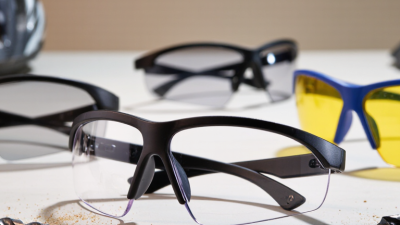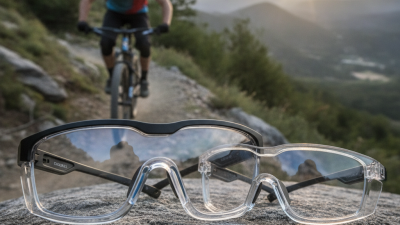
China has become a significant sourcing base for optical components, including Impact Lenses used in safety eyewear, industrial visors, sports equipment, and protective assemblies. Global buyers often value China’s broad manufacturing capacity, flexible production options, and competitive pricing. Yet supplier selection requires more than comparing online quotations. Lens performance depends on material choice, impact testing, optical clarity, coating durability, dimensional accuracy, and stable production control.
This guide introduces leading China Impact Lenses suppliers for international buyers. It focuses on practical evidence, not attractive catalogs alone. Buyers should review technical datasheets, request product samples, and confirm testing records before placing large orders. Details such as lens thickness, curvature, transmission rate, scratch resistance, and packaging quality can affect the final application. Factory audits, quality-control procedures, and clear communication also provide useful indicators of reliability. They matter greatly.
Experienced sourcing teams know that a low unit price may conceal higher inspection, tooling, or replacement costs. Shipping schedules can change. Specifications may also be interpreted differently across markets. No supplier is perfect, and a polished presentation does not guarantee consistent performance. That limitation deserves attention. The most dependable partners explain their capabilities clearly, disclose production constraints, and support traceable quality checks. This overview helps global buyers compare supplier experience, product expertise, manufacturing resources, customization support, and service responsiveness. It also encourages careful verification, because the right Impact Lenses supplier should deliver measurable value, repeatable quality, and realistic commitments rather than promises that sound impressive but remain difficult to confirm.
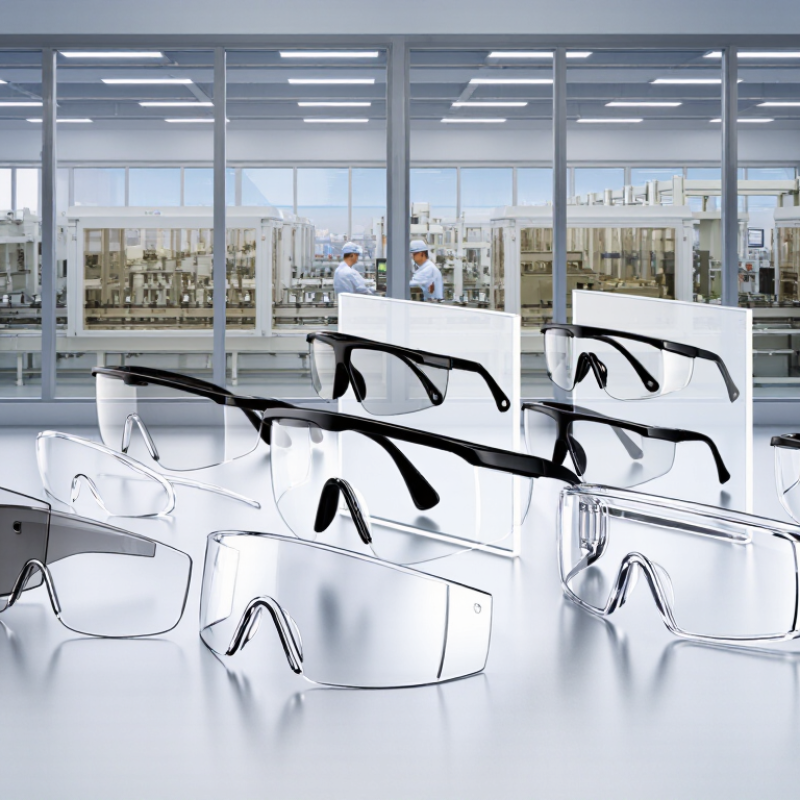
China’s top impact-lens suppliers serve factories, laboratories, construction teams, and outdoor workers worldwide. Their products typically use polycarbonate or other tested optical materials. These lenses are designed to resist flying chips, dust, and sudden contact from tools. They do not make ordinary glasses indestructible.
A reliable impact lens spreads force across its surface and helps prevent sharp fragments from reaching the eyes. Curved designs can also improve side coverage. Clear lenses suit indoor work, while tinted versions reduce glare outdoors. However, tint alone does not guarantee ultraviolet protection.
Buyers should check test markings, optical clarity, lens thickness, frame fit, and the product’s stated safety standard. Standards such as ANSI Z87.1 or EN166 may support comparison, but documentation still needs careful review.
In practical workplace checks, small details often decide comfort and protection. A loose frame can shift when someone bends down. Fogging can make workers lift the glasses, creating a real exposure risk. Anti-fog coatings help, but they are not permanent. A scratched lens should be replaced, even if it still looks usable. No lens covers every hazard. Chemical splash, laser radiation, and high-heat tasks may require specialized protection. That limitation matters. Suppliers should provide traceable test reports, consistent production records, and clear fitting guidance. Buyers should test samples with real users before placing large orders. A perfect specification on paper can still feel wrong on a busy worksite.
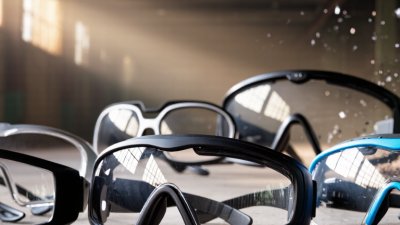
Impact lenses usually begin with polycarbonate or Trivex-style thermoplastic materials. Polycarbonate offers high impact resistance, a low weight, and a refractive index near 1.59. Trivex materials are lighter in density and can provide better optical clarity, although prices may rise.
NIOSH reports that about 2,000 U.S. workers suffer job-related eye injuries requiring medical treatment each day. This figure explains why material selection cannot depend on appearance alone.
Manufacturers commonly use injection molding, followed by trimming, polishing, and dimensional inspection. A hard coating helps reduce surface scratches, while anti-fog coatings support clearer vision in humid workshops. Suppliers should provide test evidence against standards such as ANSI Z87.1 or EN 166, including high-mass and high-velocity impact tests.
SGS technical guidance notes that coating adhesion, lens thickness, and frame compatibility can affect final protection. A lens may pass a laboratory test but perform poorly after careless assembly. That risk deserves attention.
Optical distortion should also be checked across the viewing area, especially near the edges. Some suppliers describe “impact resistance” too broadly. Buyers should request batch records, coating data, sample testing, and independent laboratory reports before placing large orders.
China’s impact lens supply base spans several practical categories: polycarbonate lens molders, coated-lens specialists, prescription safety-lens producers, and integrated protective-eyewear manufacturers. Grand View Research reported that the global safety eyewear market reached approximately USD 3.1 billion in 2023, with continued growth expected through 2030. This demand is pushing Chinese suppliers toward faster tooling and more consistent optical control.
Capabilities differ sharply between factories. Experienced suppliers can manage injection molding, hard coating, anti-fog treatment, UV filtering, tint matching, and logo-free private labeling. Some also provide impact testing, dimensional inspection, and batch traceability aligned with standards such as ANSI Z87.1 and EN 166. For buyers, sample evaluation should include lens clarity, edge finish, coating adhesion, and performance after repeated cleaning. Small details matter.
Not every catalog claim survives testing. A low quotation may hide weaker coatings or unstable color control. Based on my sourcing experience, buyers should request recent test reports, production photographs, and inspection records before approving samples. The IMARC Group has identified protective eyewear as a steadily expanding industrial safety segment, but market growth does not guarantee supplier reliability. Factory audits remain valuable, especially when orders require multiple lens colors or tight optical tolerances. Some suppliers are technically capable, yet their documentation still needs improvement.
| Supplier Category | Typical Lens Materials | Common Diameter Range | Impact-Resistance Capability | Surface Treatments | Typical Applications | Export and Quality Capabilities |
|---|---|---|---|---|---|---|
| Optical Glass Impact Lenses | Crown glass, borosilicate glass, fused silica | 5–100 mm standard; larger sizes available by project | Thermal and mechanical stability; suitable for protected optical assemblies | Anti-reflection, protective, hydrophobic, metallic or dielectric coatings | Industrial cameras, machine vision, lighting systems, optical instruments | CNC grinding, polishing, centering, interferometric inspection, custom packaging |
| Polycarbonate Impact Lenses | Optical-grade polycarbonate | 10–120 mm, depending on molding or machining method | High impact resistance and low weight; suitable for safety-focused designs | Hard coat, anti-fog, anti-scratch, UV-protective and anti-reflective finishes | Protective eyewear, outdoor sensors, vehicle lighting, security equipment | Injection molding, precision machining, optical measurement and lot traceability |
| Acrylic Impact-Resistant Lenses | Optical PMMA and modified acrylic | 10–300 mm for molded or fabricated components | Good weatherability and optical clarity; moderate impact resistance | Hard coating, UV stabilization, anti-glare and tinted finishes | LED optics, display covers, traffic equipment, architectural lighting | Injection molding, thermoforming, CNC finishing and visual inspection |
| Optical Dome and Window Suppliers | Fused silica, optical glass, sapphire, polycarbonate | 15–250 mm outside diameter; custom geometries available | Designed for environmental protection against dust, moisture and mechanical contact | Broadband AR, infrared AR, anti-fog, hydrophobic and protective coatings | Surveillance cameras, marine optics, outdoor imaging and sensor housings | Spherical and aspherical machining, environmental sealing and coating inspection |
| Infrared Impact-Protection Lenses | Germanium, silicon, zinc sulfide, chalcogenide glass | 10–150 mm, with dimensions defined by the imaging system | Protective optical elements for thermal and infrared imaging assemblies | MWIR, LWIR, DLC, AR, hydrophobic and abrasion-resistant coatings | Thermal cameras, inspection equipment, security systems and industrial sensors | Diamond turning, coating uniformity testing, spectral transmission testing and sealing |
| Aspherical Impact Lenses | Optical glass, PMMA, polycarbonate and fused silica | 3–120 mm effective aperture | Impact-resistant optical design with reduced aberration and compact form factors | Visible, near-infrared and broadband anti-reflective coatings | Machine vision, barcode readers, laser modules and compact imaging systems | Precision molding, CNC polishing, profile measurement and optical performance testing |
| Fresnel and Condenser Impact Lenses | Optical acrylic, polycarbonate and molded glass | 20–500 mm, depending on pitch and optical design | Lightweight impact-resistant options for large-area illumination and collection | UV protection, hard coat, anti-glare and light-management textures | Solar simulators, LED lighting, projection systems and optical concentrators | Precision tooling, injection molding, optical efficiency testing and dimensional control |
| Protective Cover Lenses for Cameras | Tempered glass, optical glass, sapphire, polycarbonate | 8–200 mm, including circular, rectangular and custom profiles | Resistance to impact, abrasion, vibration and outdoor contamination | AR, anti-fingerprint, oleophobic, hydrophobic and scratch-resistant coatings | Industrial cameras, automotive cameras, access-control systems and robotics | Flatness measurement, edge finishing, coating adhesion tests and customized assembly |
| Custom Optical Lens Assemblies | Glass, optical polymers, sapphire and infrared materials | Project-specific; single lenses or multi-element assemblies | System-level design for shock, vibration, pressure and environmental exposure | Application-specific AR, protective, filter and environmental coatings | Medical instruments, automation, aerospace-related equipment and research systems | Optical design support, prototyping, assembly, calibration and inspection reports |
Note: Specifications shown are typical industry ranges for China-based optical manufacturing and may vary according to material grade, optical design, coating requirements, production volume and application standards.
When sourcing impact lenses, global buyers should check performance before comparing prices. Ask suppliers which standard matches the intended use, market, and frame design. Common references include ANSI Z87.1, EN 166, and ISO 16321. These standards are not interchangeable. A certificate alone proves little unless it identifies the exact lens material, coating, thickness, and test configuration.
Request recent laboratory reports and traceable batch records. The report should show impact energy, optical quality, UV protection, and resistance to abrasion or chemicals where relevant. Check whether testing covered finished lenses, not only raw sheets. Inspect sample edges, mounting points, and coating uniformity under direct light. Small bubbles or uneven tint may reveal weak process control. They matter.
Reliable suppliers should explain inspection frequency, calibration records, and corrective actions for failed batches. Ask for production samples from different dates, then compare clarity, dimensions, and coating adhesion. A factory visit can confirm storage conditions, clean-room practices, and packaging protection, but it cannot replace independent testing. Be careful with vague claims such as “military grade” or “premium safety.” They sound convincing, yet they are not measurable requirements. I would also review labeling and user instructions for the destination market. Some buyers overlook this step. That mistake can delay customs clearance or create avoidable safety concerns. Specifications should be written clearly, because informal promises often disappear after payment.
Selecting an impact lens supplier requires more than comparing prices. Ask about lens materials, optical clarity, impact resistance, and coating durability. A dependable supplier should explain each specification in practical terms. Request recent test reports, production samples, and clear tolerance data. Vague answers deserve caution.
Inspect the supplier’s quality process. Check whether incoming materials are recorded and whether finished lenses receive visual and dimensional inspections. Ask for batch traceability, inspection photographs, and corrective action records. A factory visit can reveal useful details, such as dusty storage areas or poorly labeled cartons. Online presentations are not enough.
Tips: Compare samples under the same lighting conditions. Measure thickness with a calibrated gauge. Test packaging after simulated transport. Confirm lead times in writing. Discuss replacement procedures before placing an order. Evaluate communication speed, but do not confuse fast replies with technical competence.
Suppliers serving different optical applications may understand fitting problems, coating defects, and packaging risks better. However, no supplier is perfect. Even an experienced factory may miss a small edge chip or underestimate seasonal delays. Start with a controlled trial order, document your acceptance criteria, and review the results honestly. Reliability develops through evidence, not promises.